Sunday, 11 February 2024

MONUMENT OF LOVE : THE TAJ MAHAL

HERITAGE MONUMENT OF LOVE: THE TAJ MAHAL 


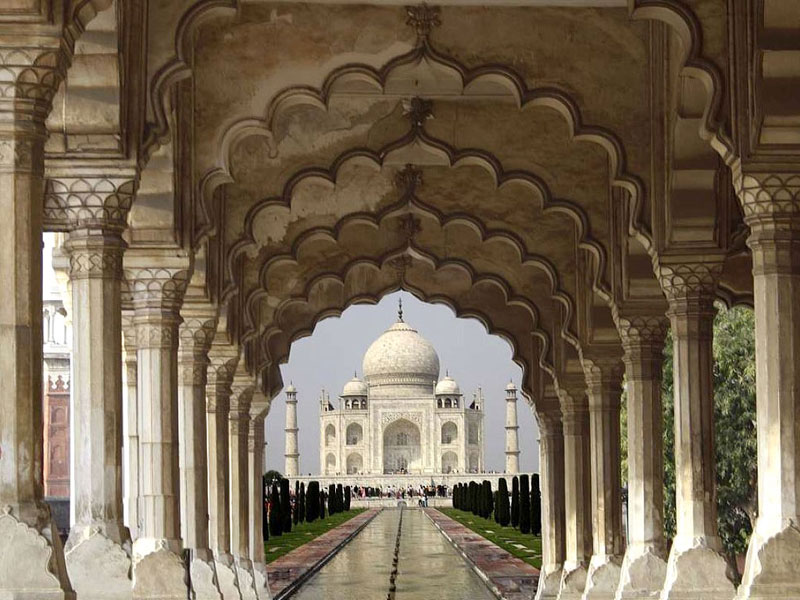
Famous poet Rabindranath Tagore portrayed it as ‘a teardrop on the cheek of the universe’ and Rudyard Kipling called it ‘the embodiment of all things pure’. Mughal emperor Shah Jahan famously said – “it made the moon and the sun drop tears on it”. What is it that we are talking about? Of course the one and only Taj Mahal, a monument built out of immense love and memory, a monument that made hundreds of thousands of people bow down to their knees, a monument that made the city of Agra a famous and widely visited tourist spot in India. It is a place where you’ll fall in love with the Mughal Era and pleasure yourself with the architecture and royalty.

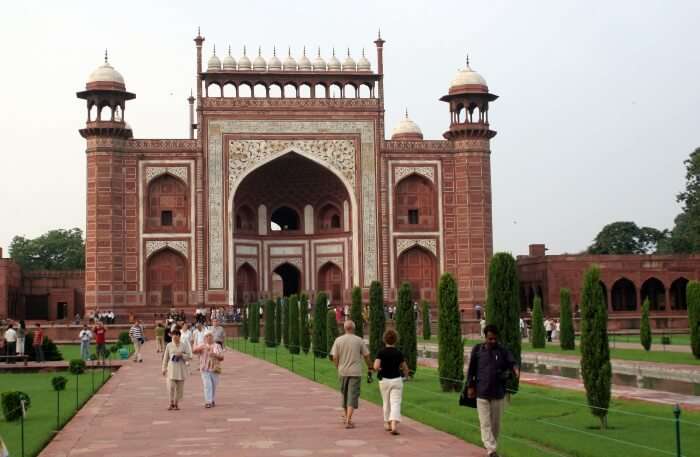
People widely consider it as one of the most beautiful buildings in the world. Located in the historical city of Agra, the Taj Mahal is called as the ‘symbol of love’. A wide range of visitors come around admiring the beauty of the monument and appreciate the architecture. Taj Mahal is known as the Crown of Palaces in Persian, giving a breathtaking sight to its aficionados. Regarded as one of the finest illustrations of Mughal architecture in India, Taj Mahal is a UNESCO World Heritage Site. One of the best parts of visiting the Taj Mahal is to appreciate the elegance of aptness of extents and luxuriousness of geometrical prototypes of such gracefully done gardens that enhance the dignity of the Taj Mahal, adding glory to the slenderness of this symbol of love, perseverance and beauty.

  • Interesting Facts About Taj Mahal:

 
Any Taj Mahal information is incomplete without mentioning some interesting details about this place. Being one of the seven wonders of the world itself makes the Taj Mahal location an interesting spot to visit and explore. But here are some of the facts that we didn’t know about earlier. Let’s dig some of them:

* There is one small hole located on the ceiling of the main hall right above the tombstone of Shah Jahan’s beloved Mumtaz Mahal. Seems like there is a flaw in the magnificent Taj. It is said that one of the artisans decided to sabotage the emperor’s dream of having a flawless monument, so he made a hole which is perpendicular to the tombstone of the queen.

* There was a temple built and named after the infamous and one of the biggest Indian conman Natwarlal who apparently had sold the grandiose Taj Mahal at least thrice to some wealthy individuals. The infamous Natwarlal is widely known for selling the Taj repeatedly so his native villagers decided to build a temple on his name with his statue.

* The minarets were built leaning outwards. It was done so to protect the monument from natural calamities like earthquakes. It’s just a matter of keen observing and you’ll notice that the four minarets are leaning outwards. It was done to ensure the safety of the tomb.

* It is strange but it is a fact that the magnificent Mahal is quite taller than Delhi’s heritage monument – the Qutub Minar. The lofty Taj is actually five feet taller than Delhi’s Qutub Minar. Strange but true.

* If we ever decide to find out how expensive the Taj Mahal would be now, it sure will take a breath away. Shah Jahan had spent around 32 million rupees on the architecture during that time. If we do the calculations keeping the present rate in mind, the amount would be around 1,062,834,098 USD. Quite Expensive!

* The Taj is visited by over 12,000 people every day.

* The monument changes colors. Depending on the light outside and the time of the day, the monument can appear to change its colors. The beautiful Taj will look a little pink in the morning, white in the day time and golden-ish after the sun sets.

* More than 1,00 elephants used to transport the heavy supplies and materials that were going to be used in the construction of the Taj Mahal. 

* In 2007, the Taj Mahal was declared as one of the Seven Wonders Of The World by bagging 100 million votes. This increased the inflow of tourists double-fold. 


  • Taj Mahal Timings And Entry Fee:

Taj Mahal, Agra timing is not set. The Taj opens 30-45 minutes before the sunrise and closes its gates about 30 minutes before the sunset each day. Also, one should note that the Taj Mahal remains closed on Fridays for public viewing.

The entry fee for this monument differs for the citizens of different countries. The normal fee structure is such:

Foreign nationals: INR 1100/- per person
SAARC and BIMSTEC nationals: INR 540/- per person
Indian nationals: INR 50/-
Main Mausoleum: INR 200/-

Note: Photography and videography are permitted inside the premises, but not inside the mausoleum. Tripods are strictly forbidden. Make sure you remove or cover your shoes before entering.


  • Places To Visit Near Taj Mahal:

* AGRA FORT


* AKBAR'S TOMB


* VRINDAVAN


* FATEHPUR SIKHRI


  • How To Reach Taj Mahal:
As Agra is well-connected with the major cities of India via different transports, it has never been difficult to reach the Taj Mahal. So, here are the main ways to reach this ‘symbol of love’:

* By Air: Agra is equipped with its own airport which is approximately 7 kilometers away from the city center. This is the fastest way to reach Agra from any part of India or the world. As several airlines travel here regularly, it is not difficult to find a ticket on one of the Indian airlines. From the airport, you can hire a taxi to reach the Taj Mahal. 

* By Rail: Agra connects very well with the rest of the country via railway. The main railhead here is Agra Cantonment and there are two other railway stations – Agra Fort and Raja ki Mandi. Some of the most popular trains plying to nearby cities are Taj Express, Shatabdi, Palace on Wheels, and Rajdhani. There are cab or taxi services easily available at the premises to reach your further location. 

* By Road: If you are traveling from any nearby city, then the best option is to plan an amazing road trip to Agra. Moreover, A/C buses, non-A/C buses, and state buses also ply between close places like Mathura, Delhi, and Jaipur. So, one can opt for bus service or drive themselves to Agra. 


FOLLOW FOR MORE UPDATES!!


AI: The New Era

AI: THE NEW ERA IN HUMAN LIFE


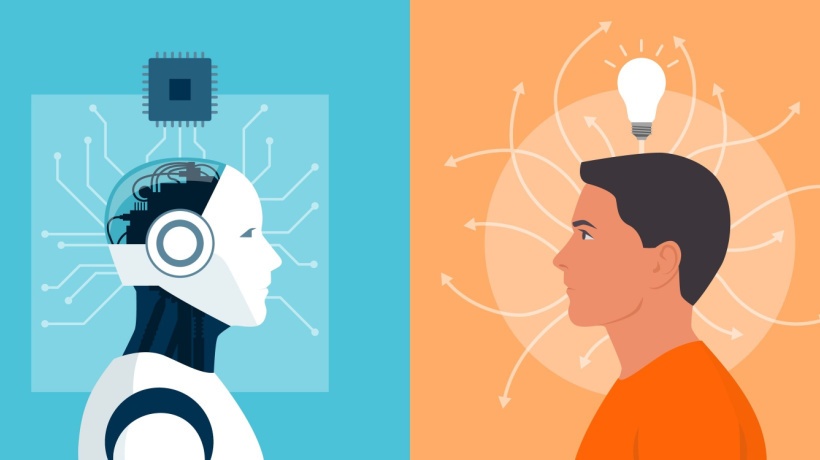
AI represents the dawn of a new era, profoundly reshaping various aspects of society, economy, and human life. AI paces our lives by accelerating various processes, enhancing convenience, and enabling innovation across different domains. Here's how:

  1. * Faster Decision Making: AI algorithms analyze data at incredible speeds, enabling quicker decision-making processes in areas such as finance, healthcare, and manufacturing.
  1. * Efficient Communication: AI-powered chatbots and virtual assistants facilitate instant communication, streamlining interactions with businesses, customer service, and even within personal devices.

* Personalization: AI-powered algorithms can analyze user data to provide personalized recommendations, such as in e-commerce, streaming services, and social media platforms.

* Advancements in Healthcare: AI can assist healthcare professionals in diagnosing diseases, developing treatment plans, and managing patient data, leading to improved patient outcomes and personalized medicine.

* Enhanced Safety and Security: AI technologies contribute to improving safety and security through applications like facial recognition for identity verification, predictive analytics for crime prevention, and cybersecurity threat detection.

* New Opportunities and Jobs: While AI is automating certain tasks, it's also creating new job opportunities in AI development, data science, and related fields, driving economic growth and innovation.

* Ethical and Societal Implications: The rise of AI raises important ethical and societal questions regarding privacy, bias, job displacement, and the distribution of wealth, prompting discussions and debates on how to harness AI's potential responsibly.

* Transformation of Industries: AI is revolutionizing industries ranging from healthcare and finance to manufacturing and entertainment. It's optimizing processes, driving efficiency, and unlocking new possibilities for innovation.

* Improved Accessibility: AI-driven technologies make services more accessible to people with disabilities, such as speech recognition for individuals with mobility impairments or text-to-speech for the visually impaired.

* Predictive Insights: AI analyzes large datasets to make predictions and recommendations, helping in areas like predictive maintenance in industries, personalized healthcare treatment plans, and targeted marketing campaigns.

* Continuous Evolution: AI technologies are constantly evolving, with ongoing advancements in machine learning, natural language processing, robotics, and other areas, promising even greater transformations in the years to come.

In summary, AI represents a new era characterized by unprecedented technological advancements, societal shifts, and opportunities for progress, marking a pivotal moment in human history.AI accelerates the pace of our life by enhancing efficiency, enabling personalized experiences, driving innovation and improving various aspects of safety and convenience across different sectors and applications.

Saturday, 10 February 2024

IMPORTANCE OF EDUCATION

             IMPORTANCE OF EDUCATION


Following are the importance of education:-

* Empowerment: Education empowers individuals by providing them with knowledge, skills, and opportunities to improve their lives. It equips them with the tools they need to pursue their goals, make informed decisions, and take control of their destiny.

* Empowerment: Education empowers individuals by providing them with knowledge, skills, and opportunities to improve their lives. It equips them with the tools they need to pursue their goals, make informed decisions, and take control of their destiny.

* Economic Opportunities: Education opens doors to economic opportunities by enhancing employability, increasing earning potential, and fostering entrepreneurship. It equips individuals with the skills demanded by the job market, thereby reducing unemployment and poverty.

* Social Mobility: Education is a key driver of social mobility, enabling individuals from diverse backgrounds to improve their socioeconomic status and achieve upward mobility. It provides equal access to opportunities and helps break the cycle of intergenerational poverty.

* Critical Thinking and Problem-Solving: Education fosters critical thinking, problem-solving, and analytical skills, which are essential for navigating complex challenges in personal, professional, and societal contexts. It encourages individuals to question, evaluate, and innovate, leading to creative solutions and progress.

* Health and Well-being: Education is closely linked to better health outcomes and overall well-being. Educated individuals are more likely to adopt healthier lifestyles, access healthcare services, and make informed decisions regarding their health and the health of their families.

* Civic Engagement and Democracy: Education promotes civic engagement, political participation, and informed citizenship. It equips individuals with the knowledge and skills to understand societal issues, engage in public discourse, and contribute positively to democratic processes and social change.

* Global Citizenship: In an interconnected world, education fosters global citizenship by promoting cross-cultural understanding, tolerance, and cooperation. It prepares individuals to engage with diverse perspectives, appreciate cultural diversity, and address global challenges collaboratively.

* Personal Fulfillment: Education enriches individuals' lives by exposing them to new ideas, experiences, and opportunities for personal growth and fulfillment. It cultivates curiosity, creativity, and a lifelong love for learning, leading to a more fulfilling and meaningful existence.

* Environmental Awareness: Education raises awareness about environmental issues and sustainability, fostering a sense of responsibility towards the environment and promoting environmentally friendly behaviors and practices.

* Cultural Preservation and Heritage: Education helps preserve and promote cultural heritage and traditions by transmitting knowledge and values from one generation to another. It fosters a sense of identity, pride, and appreciation for one's cultural heritage.


In summary, education is necessary for everyone because it empowers individuals, drives economic and social progress, fosters critical thinking and problem-solving skills, promotes health and well-being, strengthens democracy and civic engagement, fosters global citizenship, cultivates personal fulfillment, and contributes to environmental sustainability and cultural preservation. It is a fundamental human right and a powerful tool for individual empowerment, societal development, and global advancement.

FOLLOW FOR MORE UPDATES!!

CAUSES OF POPULATION EXPLOSION IN INDIA

CAUSES OF POPULATION EXPLOSION IN INDIA India is the world’s most populous country, with over 1.3 billion people. It overtakes China to beco...